
Concrete Maintenance Tips for Saratoga Springs Homeowners
By late winter in Saratoga Springs, most homeowners have noticed at least one new crack or rough patch on their driveway, patio, or walkway. Whether it progresses into a costly repair or stays a minor cosmetic issue depends almost entirely on maintenance decisions made in the months that follow. Concrete in Utah County’s climate is highly maintainable — it just requires the right attention at the right times. This guide gives Saratoga Springs homeowners a practical annual maintenance schedule for their concrete surfaces.
Annual Concrete Maintenance in Saratoga Springs
Let us assess and seal your concrete before the next winter season. Call (888) 376-0955.
Why Concrete Maintenance in Saratoga Springs, UT Matters
Concrete maintenance in Saratoga Springs is less about cosmetic preference and more about climate defense. The semi-arid climate at 4,547 feet elevation delivers both extremes: summer UV that degrades unsealed surface paste and winter freeze-thaw cycles that attack any concrete that’s holding moisture. An unsealed Saratoga Springs driveway ages 2–3 times faster than a properly sealed one — not because the concrete is worse, but because maintenance determines how much damage each winter season inflicts.
Concrete Saratoga Springs homeowners invest thousands of dollars in — driveways, patios, walkways — can realistically last 30–50 years with proper maintenance. Without it, the same concrete may need significant repair or replacement within 15 years.
Spring Inspection Checklist (April–May)
Spring is the most important time to assess concrete condition in Saratoga Springs. After 30+ freeze-thaw cycles and the weight of winter snow loads, surfaces reveal what winter did.
Inspect every surface:
- Walk the full length of driveways and walkways looking for new or widened cracks
- Check patio surface for scaling, spalling, or new crazing patterns
- Tap concrete steps with a hammer — hollow sound indicates delamination beneath the surface
- Check grade at foundation perimeter — verify water still drains away from the structure
Document any new damage:
- Photograph cracks with a ruler alongside for width measurement
- Note whether cracks are stable (same width throughout) or active (wider at one end)
- Record which areas show new scaling vs. areas that look the same as last spring
Prioritize repairs:
- Cracks 1/4 inch or wider: repair before next winter to prevent widening
- Scaling covering 10%+ of any surface: evaluate resurfacing vs. sealing
- Settlement or heaving changes: assess whether repair or replacement is warranted
Summer Maintenance Tasks (June–August)
Summer is the right season for most major concrete work in Saratoga Springs — conditions are optimal for new pours, repairs, and sealing.
Crack repair: Flexible polyurethane crack filler is appropriate for cracks up to 1/4 inch wide that are stable. Clean the crack with compressed air, apply backer rod for cracks deeper than 1/4 inch, and fill flush with the surface. Allow to cure before sealing.
Concrete resurfacing: For surfaces with widespread minor scaling, a polymer-modified resurfacer applied to clean, properly prepared concrete restores the surface texture and adds sealer protection. This is best done in temperatures between 60°F and 85°F — Saratoga Springs’ June and July mornings are ideal.
Sealing: If sealer is due (every 2–3 years for most Saratoga Springs concrete), summer is the right application window. See the sealing section below for product selection.
Fall Preparation Tasks (September–October)
Fall is the last chance to protect Saratoga Springs concrete before winter. Tasks that don’t happen in fall don’t happen until spring — by which time another winter’s worth of freeze-thaw damage has occurred.
Apply sealer if not done in summer: October is the last practical sealing window in Saratoga Springs before temperatures drop too low for proper cure. Most sealers require 50°F+ for application and 24 hours without rain or freezing temperatures.
Fill cracks identified in spring inspection: Any cracks documented in spring and not yet repaired should be filled before first frost. Water in an open crack freezes and widens the crack — filling it now eliminates this cycle.
Clean up around concrete edges: Soil or mulch built up against driveway or patio edges holds moisture against the concrete perimeter through winter. Pull soil back 1–2 inches from concrete edges to allow drainage.
Check gutter extensions: Downspout discharge should be directed at least 4 feet from any concrete surface or foundation. Concentrated gutter discharge onto concrete or against foundations saturates the soil and amplifies clay expansion and freeze-thaw effects.
Winter Protection Practices
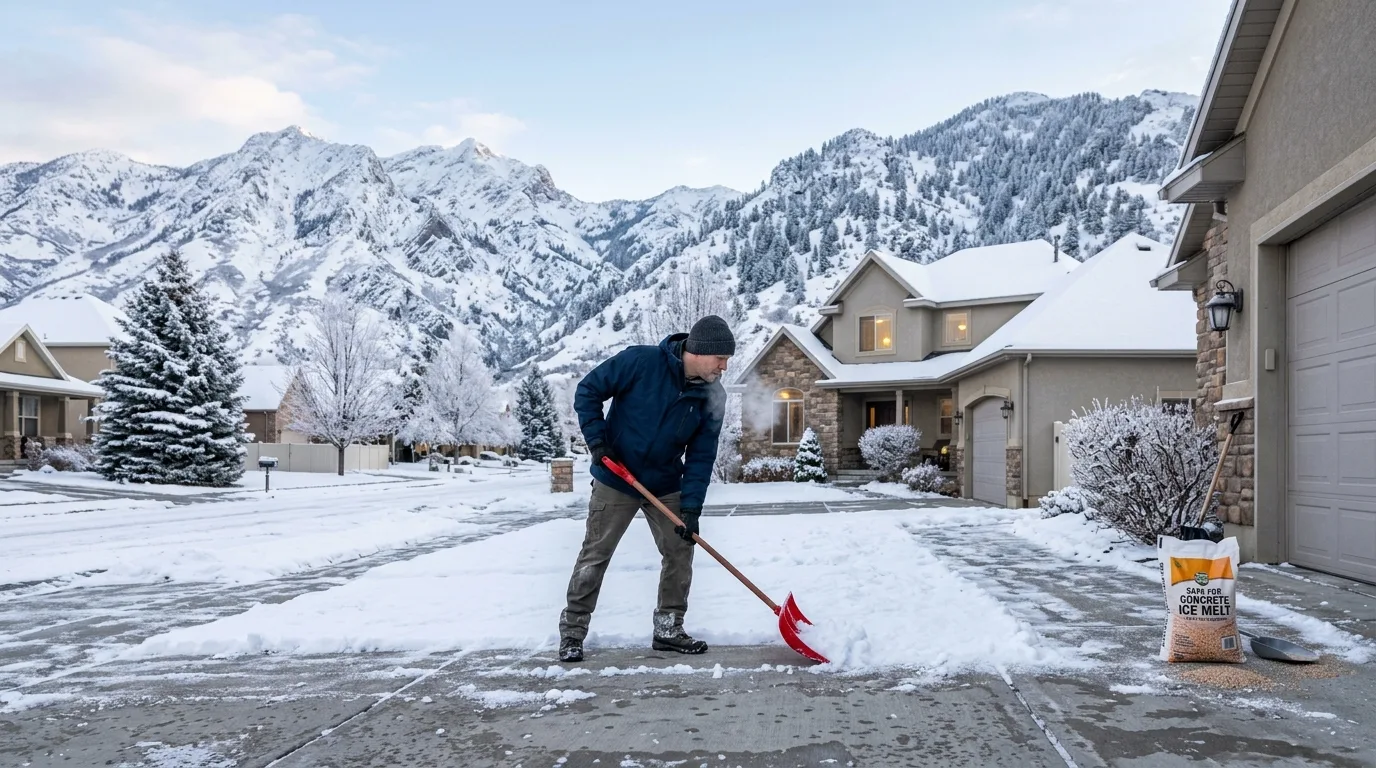
Avoid rock salt on concrete: Sodium chloride (rock salt) is the most damaging deicing chemical for Saratoga Springs concrete. It lowers the freezing point while increasing the number of freeze-thaw cycles the surface experiences. On unsealed or aging concrete, rock salt significantly accelerates surface scaling. Use sand for traction; apply magnesium chloride sparingly if a chemical deicer is needed.
Use plastic snow shovels: Metal-edged shovels chip new and existing concrete. A plastic shovel edge is gentle on the surface and safe for use on colored or stamped surfaces.
Clear snow promptly: Snow that sits on concrete creates extended periods of freeze-thaw cycling as it melts and refreezes. Prompt snow removal reduces the number of cycles the surface endures per storm.
Sealing Schedule for Saratoga Springs Concrete
Sealing schedule varies by concrete type and exposure:
- Driveways: Every 2–3 years; sooner if the surface shows water absorption (dark wet spots that don’t dry quickly)
- Patios: Every 2–3 years; stamped concrete requires more frequent sealing (every 1–2 years) due to color maintenance
- Walkways and steps: Every 2 years; steps especially benefit from frequent sealing due to edge exposure
- Garage floors: Every 3–5 years for plain concrete; epoxy-coated floors follow epoxy manufacturer recommendations
Sealer types:
- Penetrating sealers: Silane-siloxane formulations that absorb into the concrete and waterproof from within. Best for Saratoga Springs driveways and walkways exposed to heavy traffic.
- Acrylic sealers: Film-forming sealers that enhance color and gloss. Best for stamped and decorative concrete. Require reapplication more frequently than penetrating types.
- Epoxy or polyurethane coatings: High-performance coatings for garage floors; 5–10 year lifespan with proper prep.
Frequently Asked Questions
How often should I seal concrete in Saratoga Springs?
Every 2–3 years for most exterior concrete surfaces in Saratoga Springs. Stamped and decorative concrete benefits from sealing every 1–2 years due to color maintenance requirements. High-traffic surfaces like driveways may need resealing on the shorter end of the range given Saratoga Springs’ freeze-thaw exposure.
What deicing products are safe for Saratoga Springs concrete?
Sand is the safest traction aid for concrete in Saratoga Springs — no chemical damage at all. Magnesium chloride is the least damaging liquid deicer for concrete. Avoid sodium chloride (rock salt) and calcium chloride, which increase freeze-thaw cycling and penetrate sealer to damage the concrete matrix.
When should I call a concrete contractor vs. doing maintenance myself?
DIY-appropriate: crack filling for cracks under 1/4 inch, sealer application, general cleaning. Contractor-appropriate: cracks wider than 1/4 inch, structural settlement or heaving, widespread surface scaling, anything involving foundation concrete, and full resurfacing projects. If you’re unsure, a free assessment from a Saratoga Springs concrete contractor costs nothing and tells you whether the issue is DIY-manageable or not.
Professional Concrete Maintenance in Saratoga Springs
Call Saratoga Springs Concrete Pros at (888) 376-0955 for concrete assessment, crack repair, and professional sealing. Serving Utah County.
Related: