
Best Time to Pour Concrete in Saratoga Springs UT
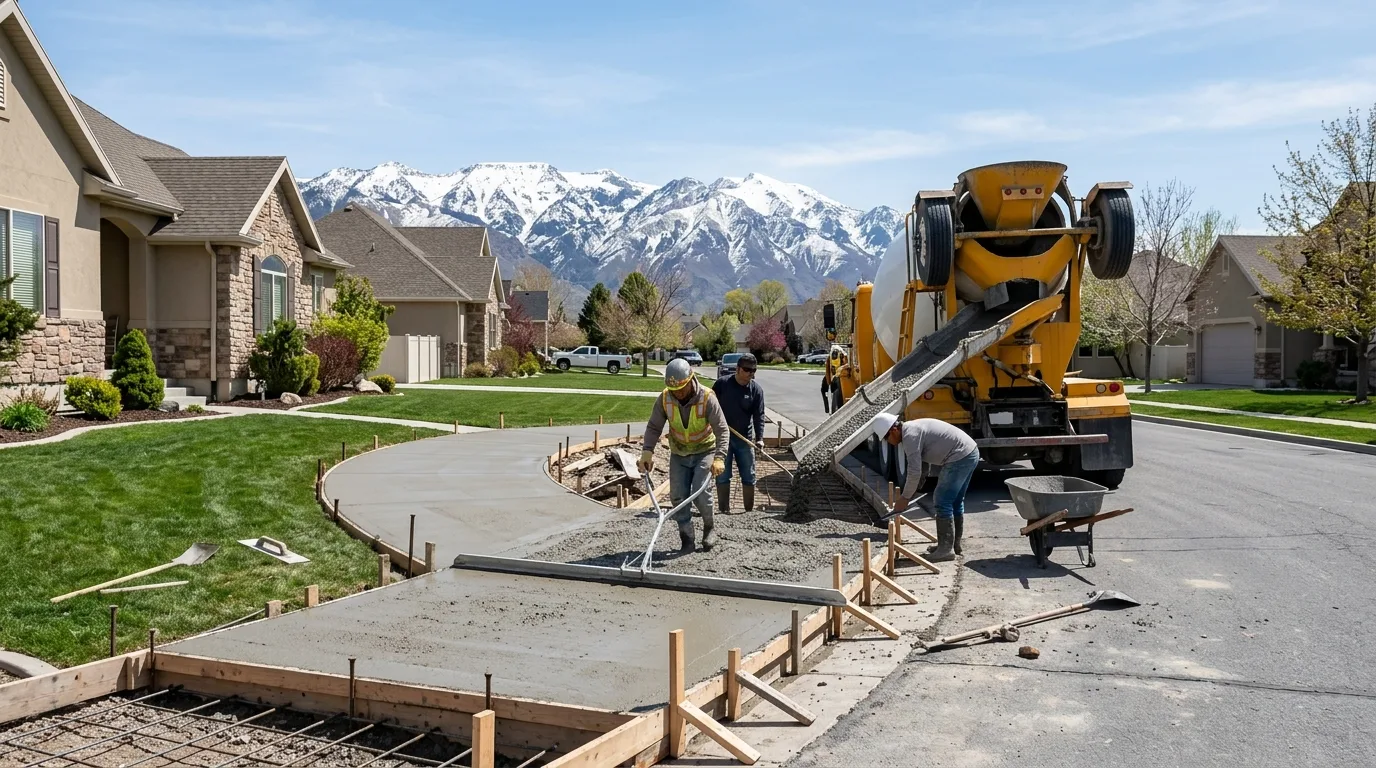
By spring in Saratoga Springs, many homeowners are ready to start concrete projects — driveways, patios, walkways, and slabs that couldn’t be poured over winter. But timing concrete pours correctly matters more in Utah County’s climate than most people realize. Pour too early and a late frost can destroy fresh concrete. Pour in the peak of summer without the right precautions and plastic shrinkage cracks can run across the surface before the crew finishes. This guide covers the optimal windows, the risks of each season, and what contractors do to work outside the prime window when necessary.
Schedule Your Saratoga Springs Concrete Project
We'll advise on timing and schedule your pour during the right weather window. Call (888) 376-0955.
Why Concrete Saratoga Springs Timing Matters
Concrete gains strength through a chemical hydration process that depends on temperature and moisture availability. Too cold, and hydration slows or stops — concrete placed below 20°F per ACI guidelines will not hydrate properly and produces weak, damaged concrete. Too hot, and moisture evaporates from the surface faster than the chemistry can proceed, causing plastic shrinkage cracks to form within minutes of placement on hot, windy days.
Saratoga Springs sits at 4,547 feet elevation with a dramatic seasonal temperature range. January lows average 17°F with 30+ inches of annual snowfall. July highs reach 91°F with very low humidity. Both extremes present challenges for concrete, which is why the choice of pour date in Saratoga Springs matters more than in most milder climates.
Optimal Season: May Through October
May through October is the established window for concrete work in Saratoga Springs. During these months, average daily temperatures stay above 50°F — above the threshold where hydration proceeds normally — and nighttime lows stay above freezing for most of the window.
June through September is the prime window within this range. Daily temperatures are consistent in the 70–90°F range, precipitation is minimal (June through September are Saratoga Springs’ driest months), and overnight temperatures reliably stay above 50°F. Crews can plan pours with confidence that weather won’t intervene.
May and October are workable shoulder months but require weather monitoring. Late May frosts and early October frosts are not uncommon at Saratoga Springs’ elevation. Scheduling within these months works when a 5–10 day weather window is confirmed — not just a single-day forecast.
Summer Precautions (Hot Weather Concrete)
At Saratoga Springs’ summer highs — particularly July and August afternoons — fresh concrete can lose surface moisture faster than the hydration reaction can tolerate. This causes plastic shrinkage cracks: small cracks that form in the surface before the concrete has any strength, while it’s still wet.
The solutions are practical: pour in the morning before temperatures peak, apply evaporation retarders to the surface during finishing, set up wind breaks if wind is a factor, and begin wet curing or apply a curing compound as soon as finishing is complete. Large concrete driveway pours in Saratoga Springs on days above 85°F are sometimes split into early morning sections to manage the surface finish window.
The clay soil base also benefits from moisture during hot pours — the base should be dampened before concrete placement to prevent the dry earth from drawing moisture out of the fresh concrete from below.
Spring Timing: After Frost Risk, Before Peak Season
April and May are desirable for homeowners who want projects done before summer. The catch is soil conditions — Saratoga Springs’ clay soils hold spring snowmelt moisture late into the season, and subgrade that hasn’t fully dried is not ideal for concrete placement. Wet subgrade reduces bearing capacity and can shift as it dries under a new slab.
The practical rule: once the ground is dry enough that a wheel compactor doesn’t sink in, the subgrade is ready. In Saratoga Springs, this typically happens late April to early May for most sites. Spring concrete pours on properly prepared subgrade with confirmed frost-free nights are entirely appropriate — and often preferable to summer due to mild temperatures and longer cure times before peak heat.
Fall Timing: Last Window Before Winter
September and October offer some of Saratoga Springs’ most favorable concrete conditions — temperatures have dropped from summer peaks, soil moisture has stabilized after summer drought, and contractor schedules often open up. This makes fall an excellent window for concrete patio and concrete driveway installations.
The constraint is the closing window. First frost in Saratoga Springs typically arrives in late October, and November nights routinely drop below freezing. A concrete pour in early October gives 30+ days of favorable curing weather; a pour in late October requires monitoring the overnight forecast carefully.
Winter Concrete Work: High Risk, Not Impossible
December through February in Saratoga Springs is high-risk for concrete work but not categorically impossible. Crews who specialize in cold-weather concrete use:
- Heated water and aggregates to raise the concrete temperature at the truck
- Insulating blankets placed over fresh concrete immediately after finishing
- Accelerators added to the mix to speed hydration in cold conditions
- Heated enclosures for smaller pours in enclosed spaces
The cost of cold-weather precautions adds $1–$3 per square foot to project cost. For exterior flatwork like driveways and patios, most contractors in Saratoga Springs decline winter pours or add significant cold-weather premiums. The risk of a quality defect — from an unexpected overnight drop to below 20°F — is too high to take lightly.
Practical Uses: Matching Project Type to Season
- Driveway replacement: May–September is ideal; avoid October–April without cold-weather precautions.
- Concrete patio: Same as driveway; stamp finishing is weather-sensitive so avoid temperatures above 85°F or below 50°F.
- Concrete repair and resurfacing: April–October for most repair products; some crack fills can be applied year-round with appropriate temperature-rated products.
- Foundation work: May–October for outdoor foundation concrete; indoor foundation work has more seasonal flexibility.
Frequently Asked Questions
When is the best time to pour concrete in Saratoga Springs, UT?
May through October, with June through September being the prime window. During this period, temperatures are consistently in the range that supports proper concrete hydration and curing without risk of freeze damage or excessive heat-driven evaporation.
Can you pour concrete in winter in Saratoga Springs?
Yes, but it requires cold-weather precautions — heated materials, insulating blankets, and accelerators — that add cost and complexity. January lows average 17°F in Saratoga Springs, and concrete cannot be placed below 20°F ambient temperature. Most exterior concrete in Saratoga Springs is avoided December through February.
How does Utah County’s spring weather affect concrete scheduling?
Spring in Saratoga Springs involves late frosts (through early May at elevation) and saturated clay subgrades from snowmelt. Both delay the practical start of the concrete season. Most contractors begin spring scheduling in mid-to-late April with a 10-day frost-free window confirmed before committing to a pour date.
Schedule Your Saratoga Springs Concrete Pour
We'll find the right weather window and schedule your project for best results. Call (888) 376-0955.
Related: