
Clay Soil & Concrete in Saratoga Springs, UT: What to Know
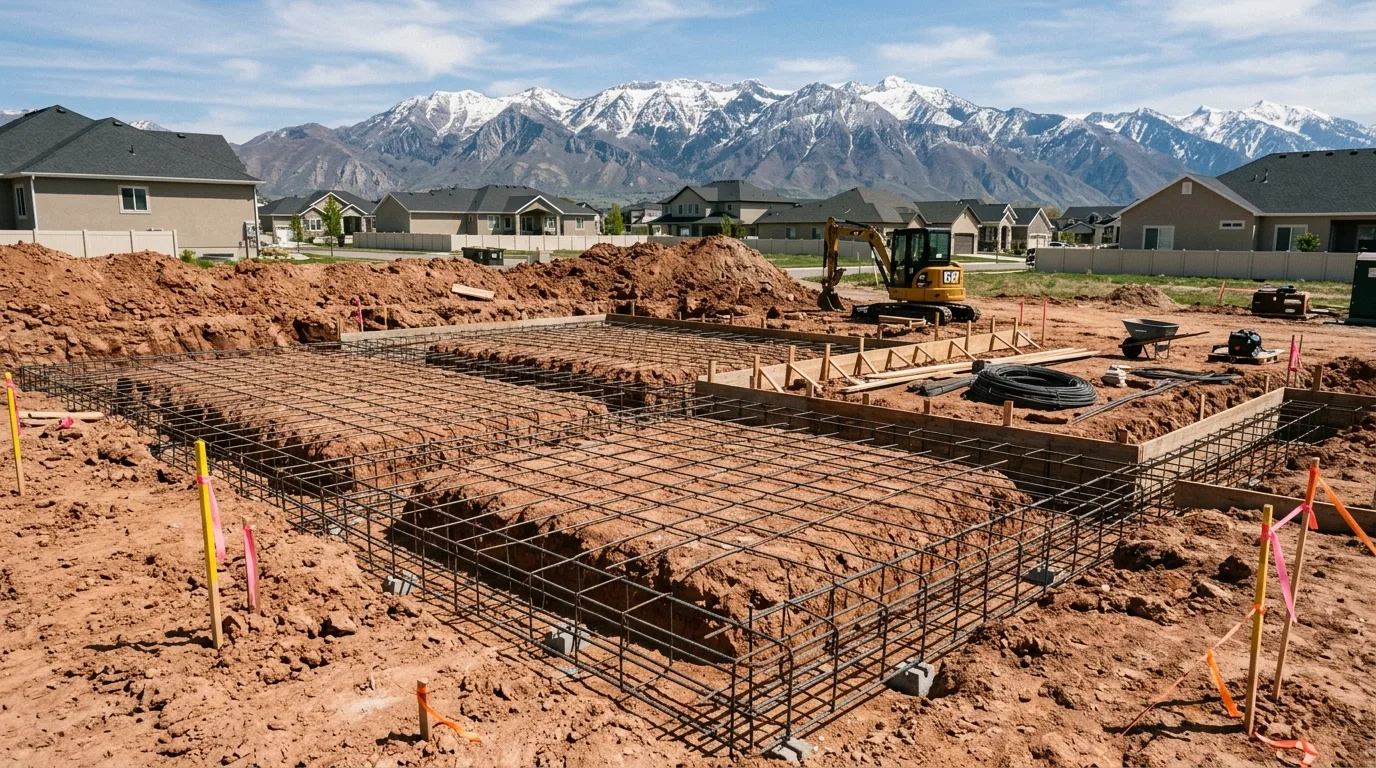
Walk into any home in Saratoga Springs with sticking doors, cracked drywall, or an uneven driveway and you’re likely looking at clay soil in action. The expansive clay soils that run throughout Utah County — beneath Fox Hollow, Pelican Point, and the newer developments along Saratoga Springs’ western corridors — are among the most challenging substrates for concrete construction in the Western United States. Understanding what clay soil does and how it interacts with your concrete is the first step toward avoiding the expensive mistakes that trip up uninformed homeowners and their contractors.
Concrete Project on Clay Soil in Saratoga Springs?
We spec every pour for Utah County's soil conditions. Free estimates — call (888) 376-0955.
Why Clay Soil Makes Concrete Harder in Saratoga Springs, UT
Clay soil is defined by its microscopic particle structure — particles so fine they hold water between them like a sponge. When Saratoga Springs clay absorbs moisture from spring snowmelt, summer irrigation, or fall rains, it expands. When it dries out in summer heat, it contracts. This cycle of expansion and contraction — sometimes 2–3 inches in either direction over a year — applies enormous force to any concrete slab, driveway, or foundation built on top of it.
The result is predictable: concrete Saratoga Springs homeowners discover cracked, heaved, or settled after a season or two on untreated clay is almost always the result of skipping subgrade preparation. The concrete itself may be perfectly poured — the problem is what’s underneath.
How Clay Soil Movement Damages Concrete
Heaving occurs when clay expands upward during wet periods. A slab poured on saturated clay can be pushed upward by several inches of soil movement, cracking the slab at its weakest points — typically at control joints or corners. In Saratoga Springs, this is most pronounced in spring after snowmelt saturates the ground.
Settlement is the opposite — when clay dries and contracts beneath a slab, it pulls away, leaving voids that remove the bearing support the slab needs. Without support from below, the concrete flexes under load, cracks, and eventually settles unevenly. This is most common in Saratoga Springs during late summer drought periods.
Foundation movement from clay expansion and contraction is the same force that causes stair-step cracks in brick veneer and sticking doors. Homes throughout Utah County built on clay without proper soil treatment experience this — it’s not a sign of poor construction, it’s a sign of inadequate soil management before construction began.
What the Right Concrete Contractor Does About Clay Soil
Proper base preparation is the primary defense against clay soil damage in Saratoga Springs. This means excavating enough depth to place a 4–6 inch layer of compacted crushed road base or gravel between the clay and the concrete. This base layer provides stable, well-drained support that doesn’t expand or contract with moisture — insulating the slab from the clay movement below.
Drainage design matters as much as base depth. Clay that stays saturated is more reactive than clay that drains quickly. Proper grade sloping away from the structure, extended downspouts, and in some cases French drains are drainage solutions that reduce clay moisture content and minimize expansion cycles. This is especially important for concrete foundations in Saratoga Springs.
Lime stabilization is sometimes used for severely expansive clay soils — agricultural lime mixed into the top 6–12 inches of clay before base installation reduces swelling potential chemically. This adds cost but is sometimes the right call on problem lots.
Geotechnical requirements — the Saratoga Springs Building Department, following IBC 2021 Chapter 18, requires soil testing for expansive soils in some construction scenarios. Engineers may require a geotechnical report before approving foundation designs on known problem soils.
Practical Uses: Matching Clay Soil Solutions to Project Type
- Driveways: 4-inch compacted road base minimum; 6-inch for heavy vehicle access or RV pads. Lime stabilization for severely expansive lots.
- Patios: Same base requirements as driveways; add perimeter drainage to prevent water from pooling against slab edges.
- Foundations: Geotechnical evaluation often required; helical piers or deepened footings may be specified on reactive clay soils.
- Walkways: Compact the subgrade and use at least 3–4 inches of road base; control joints every 4–5 feet help manage clay-driven movement.
- Slabs and RV pads: 4–6 inch base; add expansion joints at perimeter; ensure drainage slopes away from pad on all sides.
What to Ask Your Concrete Contractor
Before any concrete project in Saratoga Springs, ask:
- What is your excavation depth and how much road base will you install?
- Will you compact the base with a plate compactor?
- How does your concrete mix address freeze-thaw and clay soil conditions?
- Does this project require a soil report or permit with the Saratoga Springs Building Department?
A contractor who can’t answer these questions specifically — or who says “we just pour right on grade” — is not prepared for Saratoga Springs’ soil conditions.
Frequently Asked Questions
Why is clay soil such a problem for concrete in Saratoga Springs?
Clay soil expands when wet and contracts when dry, applying continuous force to concrete surfaces from below. In Saratoga Springs’ climate — with wet springs, dry summers, and wet falls — this cycle repeats multiple times per year. Without adequate base preparation, slabs crack, heave, and settle unevenly. This is the most common cause of concrete failure throughout Utah County.
How much does clay soil preparation add to concrete costs in Saratoga Springs?
Proper clay soil base preparation adds $500–$2,000 to most residential concrete projects in Saratoga Springs, depending on soil conditions and project size. This cost is necessary for long-term performance — contractors who skip it are saving you money on day one and costing you much more within 5–10 years.
Can existing cracked concrete be fixed if clay soil was the cause?
Yes — concrete repair in Saratoga Springs that addresses clay soil damage typically involves lifting or replacing the affected slab sections and adding base material that wasn’t there before. Simply patching the surface crack without improving the subgrade will result in the crack reappearing. See our concrete repair service for more on addressing the root cause.
Clay Soil Concrete Expertise in Saratoga Springs
We properly prep every subgrade for Utah County's clay conditions. Free estimates — (888) 376-0955.
Related: